South Africa’s Jazz Prodigy upholds The “Lingus” legacy
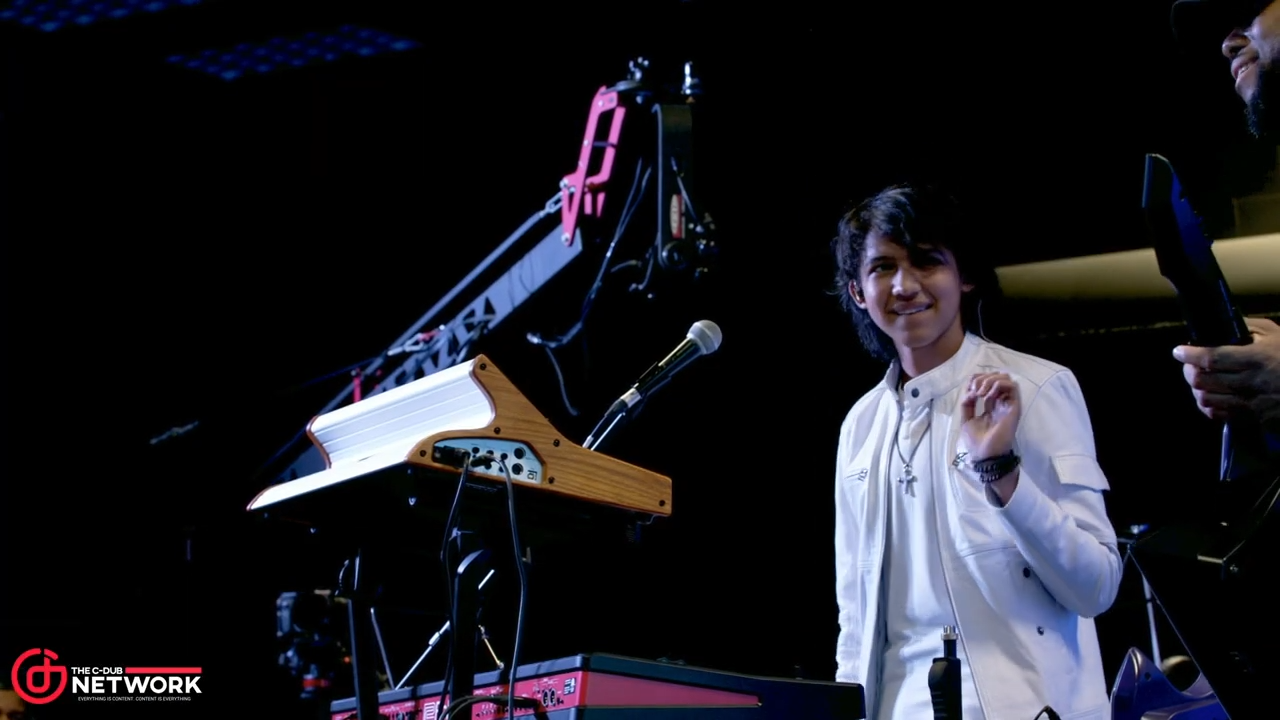
I discovered the young South African prodigy Justin Lee-Schultz during the pandemic. His keyboard solo especially took me during a performance of an original composition called “Domino Effect.” It was recorded in 2023 with Carlton Whitfield’s 10-piece gospel fusion band “What’s Your Take,” which runs a podcast that showcases the best musical talent in the world. The band is created from the participants of the show and, in this case, brought together 10 musicians who met for the first time, with only 3 days to pull off a live recording.
New Voice in Jazz Fusion
Schultz’s solo on “Domino Effect” showcases how jazz fusion continues evolving through younger generations. The jazz fusion genre emerged in the late 1960s, when musicians blended jazz harmony and improvisation with elements of rock music, funk, and rhythm and blues. This performance is respectful of the genre’s heritage while showcasing Schultz’s unique/amazing musicality.
Marc’s Breakdown: Domino Effect
- 5/4 time signature
- Complex harmonies which shift between these three distinct tonalities: Intro Theme – Eb Major; Shout Chorus/Bridge -unrelated key -B Major; Solo Section and Outro -G Major
- Justin’s solo begins around 2.5 minutes into the track, starting off slowly
- He navigates the harmonies through rapid-fire runs that include triads and poly-rhythmic pentatonic scales that challenge one’s ear
- The rhythm section builds up the intensity while he starts to solo with both hands around the 4minute mark and culminates in quick, intricate runs producing a high-energy performance
- Effective use of gear with the Roland V-Stage stage 88 full-piano and Moog Synth
Lingus Solo
When I heard Schultz’s solo, it brought to my mind the Grammy award-winning keyboardist Corey Henry, who also played an epic solo on a Snarky Puppy composition from their album We Like It Here, released in 2014. At that time, the original video of Henry’s solo on the “Lingus” track went viral on social media. He played with the renowned jazz fusion band until 2018.
Marc’s Breakdown: Lingus
- 4/4 time signature
- The solo starts at the 5 min range with simple, blues-based patterns, progressively becoming more complex and intense
- Henry employs different scales and modes, including the E minor scale at the start of his solo
- The harmony then shifts, and he uses the G major scale and the Mixolydian mode on C
- He adds more advanced jazz techniques like block chords and Phrygian dominant scales and uses quartal harmony (chords built on intervals of a fourth), for a more modern sound
- He plays with the time signature, using sync
- opation and a “stabby” rhythmic feel to create a sense of tension with the complicity of Toronto’s Larnell Lewis on drums
The Genre of Jazz Fusion Prevails
These two solos demonstrate the phenomenon of young prodigies expressing themselves in traditional genres. They both possess that rare quality that cannot be taught—an innate understanding of rhythm, melody, and emotional expression that transcends technical proficiency alone.
When they play, there’s a palpable sense of authenticity and spontaneity as both players take risks in their performances, exploring harmonic and rhythmic territories with the fearlessness of youth combined with the wisdom of seasoned professionals.
